The University of Michigan Concussion Center brings together researchers, clinicians, educators, students, and community partners to prevent, identify, and treat concussion — and put reliable information in the hands of those who need it.
“What makes the Michigan Concussion Center unique is our ability to integrate the clinical, research, and outreach and engagement portions into a unified approach, where each core works with the others to answer questions and then disseminate that knowledge beyond Michigan’s walls,” said Steven Broglio, director of the center.
That path — from laboratory to clinic to community — is central to the center’s leadership and benefit to Michigan and the world.
Concussion is not just a sports injury
Public discussion of concussion often focuses on contact sports. Athletes are important, but the center takes a much wider view.
“Concussions can occur to anyone, at any time, in any field,” Broglio said. “Each injury is unique to the context in which it occurs, and getting that individual back to work, back to school, or back to play also has unique challenges.”
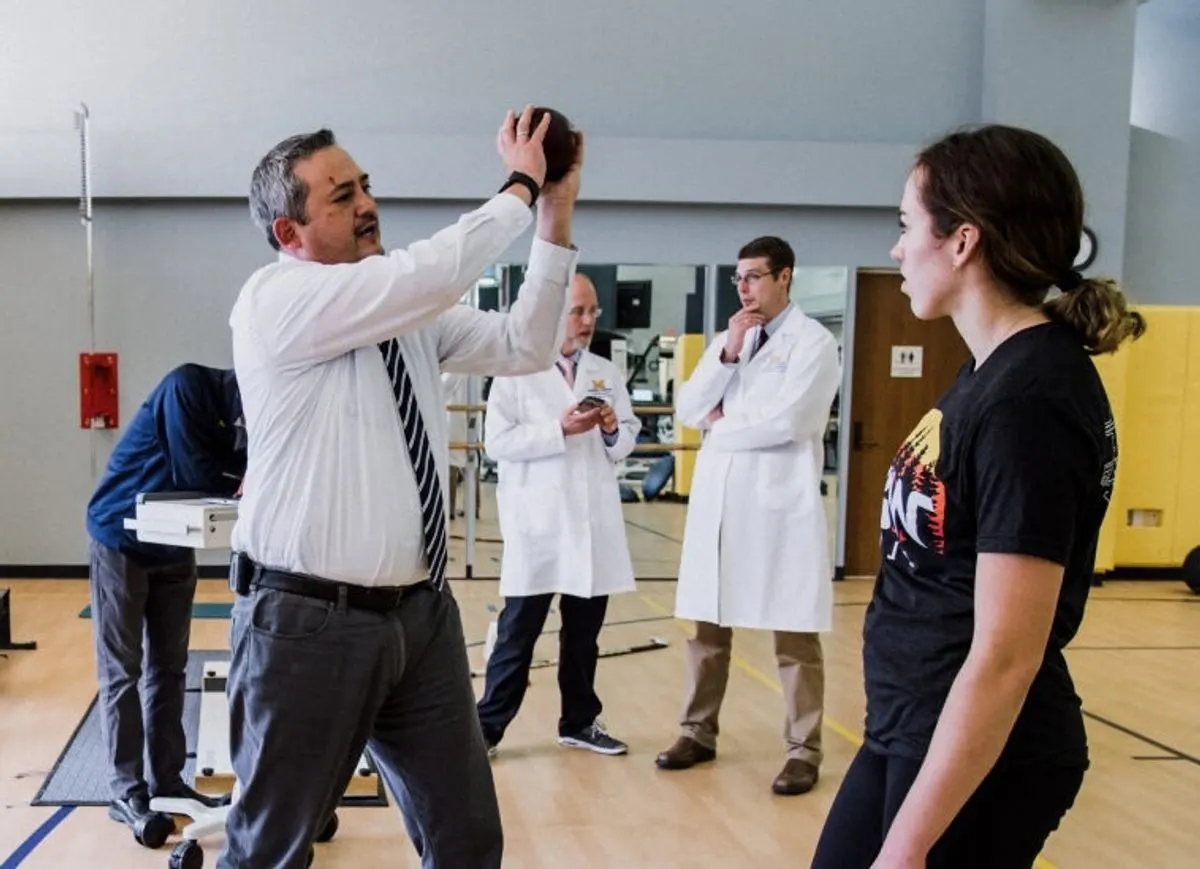
The center’s work includes children, military service members, performing artists, adaptive athletes, and people recovering from falls, vehicle crashes, and workplace injuries. Faculty expertise spans over 20 campus units, including neurology, emergency medicine, pediatrics, rehabilitation, mental health, kinesiology, engineering, public health, athletics, and other fields.
This interdisciplinary structure matters because concussion rarely affects only one part of life. It can alter balance and vision, memory and attention, and mood and sleep. Recovery may involve returning not only to physical activity, but also to the classroom, workplace, stage, or responsibilities at home.
“Concussion is such a complex injury and such a complex picture that being able to draw upon this network of experts who do this in their daily lives makes it so much easier for me to do my job well,” said Eleanna Varangis, an assistant professor of movement science and director of the Assessing Traumatic Head Injury with Neurocognitive Approaches, or ATHINA, Laboratory.
Together, specialists can tackle larger questions: Can blood markers improve diagnosis? Who faces the greatest risk? Why do some patients recover quickly while others have persisting symptoms? How can care reach communities without nearby specialists?
Turning research into more precise care
One focus is improving how concussion is identified and classified. Symptoms vary widely, and standard imaging does not reveal the injury, leaving patients and families uncertain.
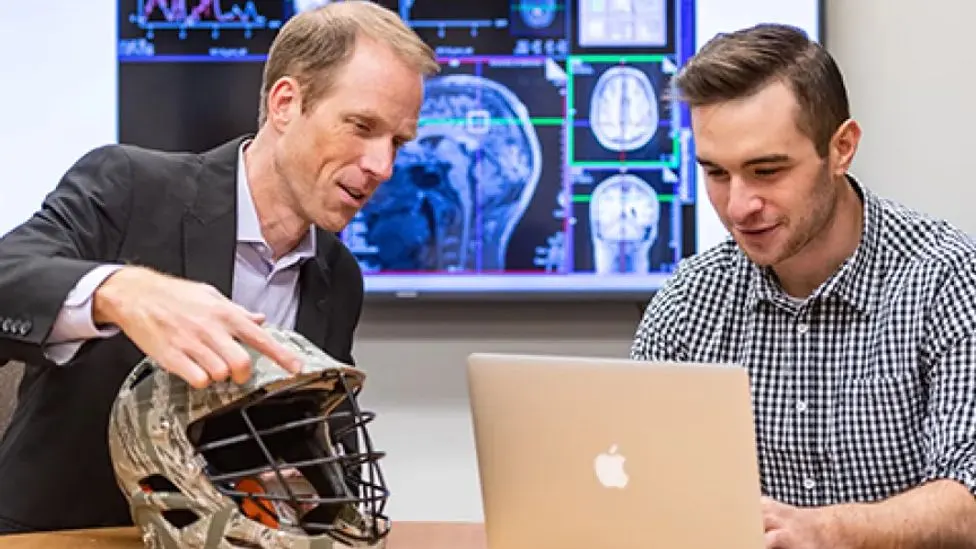
Center researchers are studying blood-based biomarkers — biological signals that could help clinicians assess traumatic brain injury more precisely. Research supported by the U.S. Department of Defense has helped optimize their use in Michigan Medicine’s emergency department. A multicenter expansion will evaluate how these tools can support personalized care in civilian and military settings and help predict long-term recovery.
The potential benefit is straightforward: clearer diagnoses, more appropriate use of health care resources, and individualized recovery plans.
Other researchers are examining brain health across the lifespan. The University of Michigan Alumni Brain Health Study follows people with histories of traumatic brain injury and repeated head impacts, broadening research beyond professional athletes. The center is also studying repeated low-level blast exposure among service members and developing risk models for cadets and midshipmen at U.S. service academies.
“I think of concussion as a million-piece jigsaw puzzle that is solid black with one white dot in the middle,” Broglio said. “Every research paper we publish is just one piece of that puzzle. Over the last 20 to 25 years, that puzzle has come more and more into clarity.”
Research has also changed concussion management. Earlier approaches emphasized prolonged physical and cognitive rest. Current evidence supports a short initial rest period followed by carefully supervised activity.
“After a short period of rest — a day or two — we want individuals to begin some light exercise and use exercise as a therapeutic tool,” Broglio said. “Under the guidance of a health professional, we can get people back more quickly and with fewer problems by gradually returning them to their full activity level.”
There is reason for hope: Strong evidence shows that when a concussion is identified quickly and managed well, outcomes are overwhelmingly positive.
Designing care for people previously left out
The center’s leadership is especially visible in its attention to populations conventional concussion systems have overlooked.
College athletes typically have well-defined return-to-sport procedures and athletic trainers. Dancers, musicians, and actors face similarly intense demands, but historically have had no comparable national framework for returning safely to performance.
U-M researchers and clinicians developed the Progressive Return-to-Performance Protocol, the first standardized, discipline-specific concussion framework for university performing arts students. Its six-step approach gradually reintroduces activity while accounting for memorized movement, ensemble interaction, stage lighting, sound, balance, props, and artistic endurance.
A dancer may need to resume turning and partnering; a musician may need to tolerate sustained sound; and an actor may need to manage stage combat, rapid movement, and memorized material. Returning too soon can aggravate symptoms or create another injury risk, yet remaining away can jeopardize a student’s education, role, or scholarship.
U-M is also developing an educational course and certification for faculty, health professionals, theater personnel, and the public, scheduled for Michigan Online in spring 2027. The goal is a model universities and performing arts organizations can adopt globally.
The center has applied the same principle to adaptive sports. In partnership with Michigan Medicine’s Adaptive and Inclusive Sports Experience and the U-M Injury Prevention Center, it supported U-M’s first college-level concussion baseline testing for adaptive athletes — a group often excluded from standard protocols.
In both cases, the center is asking: Who is missing from the existing system, and how can research close the gap?
Meeting Michigan families where they are
Leadership is measured not only in publications and grants, but also in whether knowledge reaches people who can use it.
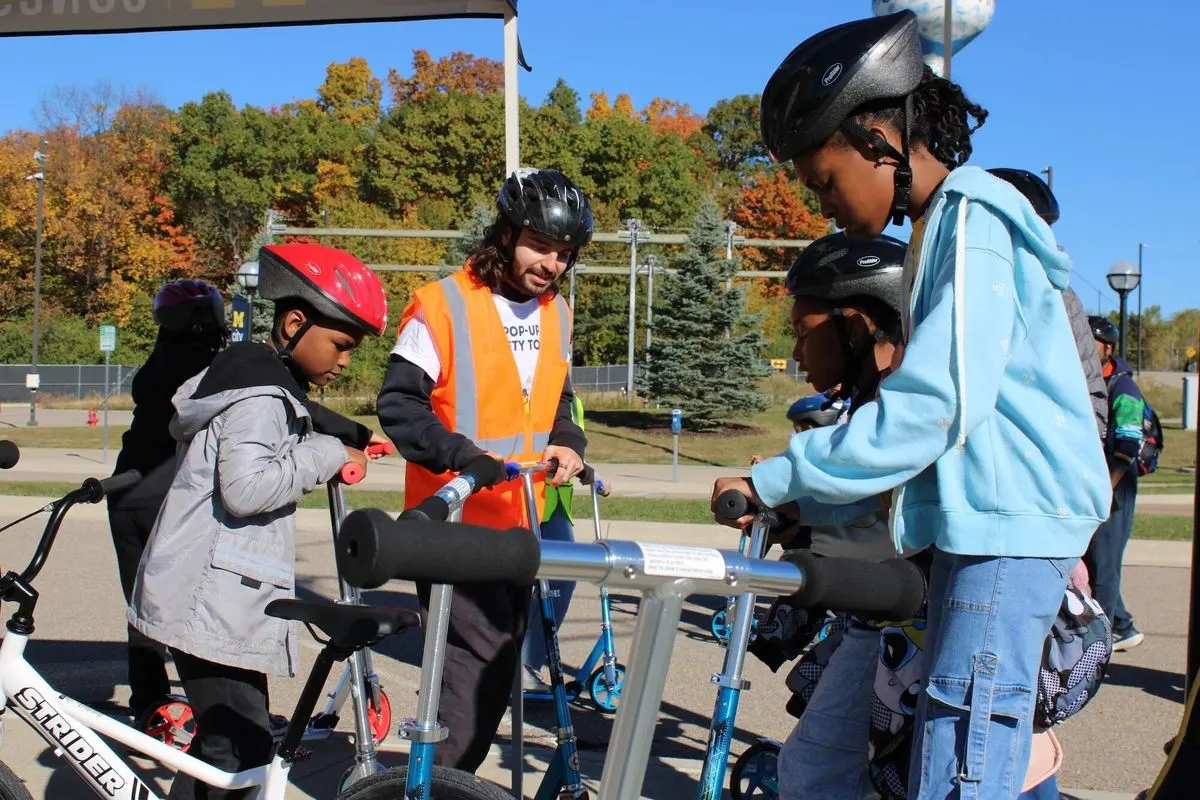
Pop-Up Safety Town events held in nine Michigan communities, including Ypsilanti, Flint, Hamtramck, and the Huron Potawatomi Pine Creek Reservation, have fitted more than 6,000 bike helmets for young children and delivered hands-on injury-prevention education and safety skills.
Safety Town kits have also been distributed to preschool lending libraries across the state, including in Northern Michigan and the Upper Peninsula, allowing educators to integrate injury prevention into everyday learning. The initiative is now expanding beyond Michigan.
Community partnerships also help researchers understand residents’ needs and barriers, making future programs more useful and equitable.
“Our research exists in a vacuum unless we know what people actually care about,” Varangis said. “Finding out what they care about is an important step in the process.”
For Varangis, community education continues after a presentation ends. “I know that I’m having a conversation with someone that is going to ripple,” she said. “They are going to have conversations with their children, friends, and neighbors about these issues.”
Giving families a clearer path through recovery
After a suspected concussion, families often face confusing questions: Which symptoms require urgent attention? When should a child return to school? How can symptoms be tracked? Where can specialized care be found?
The Concussion Navigator helps answer them. Developed by the center and national collaborators, including the U-M Injury Prevention Center, the Brain Injury Association of Michigan, and National Association of State Head Injury Administrators (NASHIA), the digital platform offers evidence-based guidance for tracking symptoms, finding providers, and safely returning to school and activity.
“We built the Concussion Navigator for the general public, so people would have a one-stop shop for information about medical advice, specialty clinics, concussion recovery, returning to the classroom, returning to play, and tracking symptoms over time,” Broglio said.
A parent should not need to read medical journals to understand the next step in a child’s recovery. A teacher should not have to improvise classroom support. A family far from an academic medical center should still find trustworthy guidance.
The center is also helping explore community paramedicine, in which emergency medical services personnel deliver concussion support in patients’ homes. That model could be especially valuable in rural and underserved areas, where transportation, specialist shortages, or cost make follow-up care difficult.
From Michigan to the world
The Concussion Center’s influence extends far beyond the state. Members have contributed to more than 30,000 publications and worked on projects in more than 25 countries.
Its reach is rooted in a broad Michigan network, including Michigan Medicine, Michigan Athletics, U-M schools and institutes, state public health agencies, Detroit Public Schools Community District, the Michigan High School Athletic Association, and brain-injury organizations. Broglio, the center’s director, is also the president of the Concussion Sport Group, an international, multidisciplinary organization of experts that establishes global scientific consensus, guidelines, and sideline assessment tools for managing sports-related concussions.
That network allows the center to study concussion comprehensively, improve care, and put evidence into practice.
The result benefits people in tangible ways — a helmet for a child, clearer instructions for a teacher, better diagnostic information in an emergency department, a personalized rehabilitation plan, or a reliable pathway back to work, school, sports, or the stage.
“You may not have had a concussion personally, but you likely know somebody who has — whether it was a friend, a relative, or a child,” Broglio said. “The work that we do here informs the policies that an athletic trainer, an emergency medicine physician, a primary care provider, or a pediatrician may use. All of that is helping individuals stay active, be healthy, and do the things they love.”
A concussion can interrupt a life in seconds. The University of Michigan Concussion Center is working across disciplines, communities, and borders to make that interruption less likely, less confusing, and less lasting. It is building a bridge between what science discovers and what people need — the knowledge, care, and confidence to protect the brain and move forward safely.