
Millions of people who are blind or visually impaired face significant barriers to digital access, especially when it comes to reading or navigating complex information online.
When U-M mechanical engineering alum, Alex Russomanno (PhD '17), began studying microfluidics at Michigan, he never expected his research could be used to improve the lives of blind or visually impaired people. Once he figured out that he could create microfluidic chips that could raise pins, creating a breakthrough in packaging for braille devices, he collaborated with Professors Sile O’Modhrain and Brent Gillespie, to create the pioneering “Holy Braille Project,” a multiline braille and tactile graphics display.
When U-M mechanical engineering alum, Alex Russomanno (PhD '17), began studying microfluidics at Michigan, he never expected his research could be used to improve the lives of blind or visually impaired people. Once he figured out that he could create microfluidic chips that could raise pins, creating a breakthrough in packaging for braille devices, he collaborated with Professors Sile O’Modhrain and Brent Gillespie, to create the pioneering “Holy Braille Project,” a multiline braille and tactile graphics display.
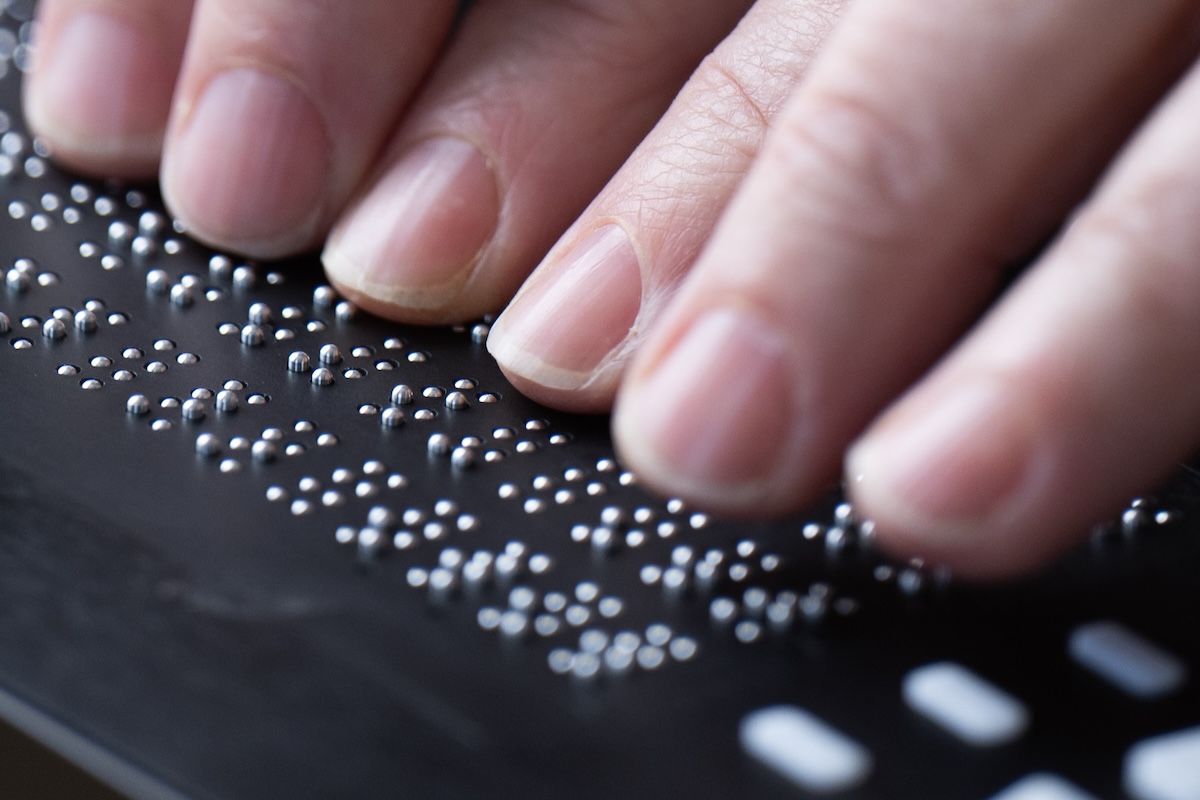
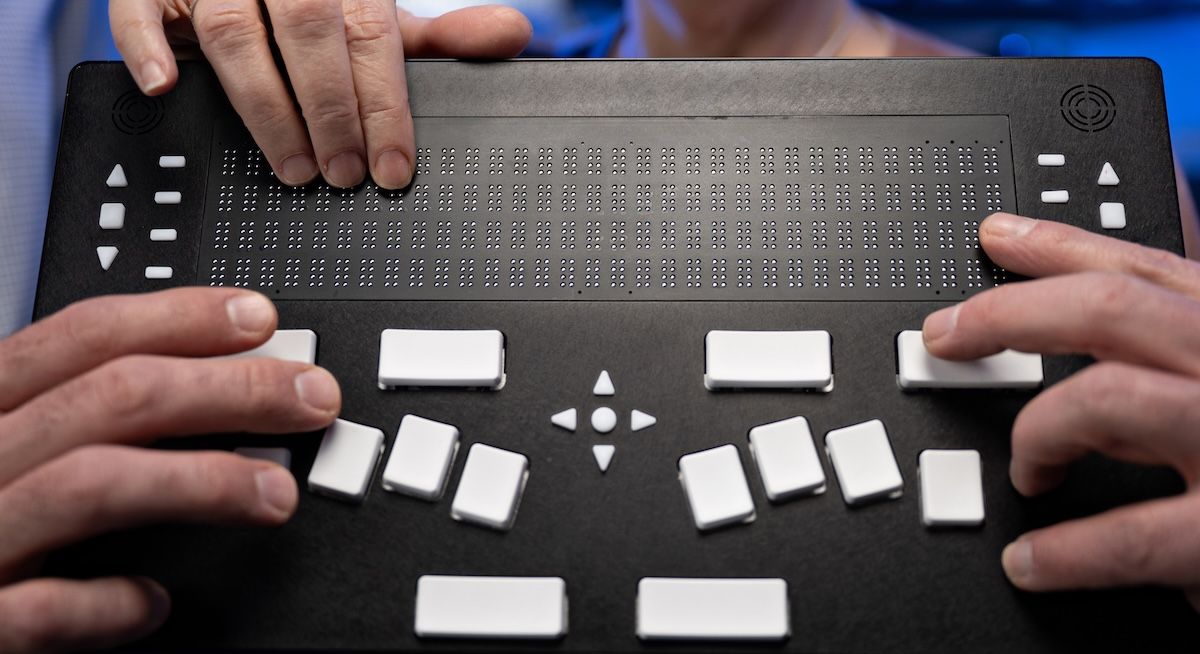
The project is a living example of what’s possible when university research teams collaborate across boundaries—in this case, microfluidics, mechanical engineering, and performing arts technology—all fueled by mission-driven innovation.
Thanks to NewHaptics’ revolutionary advancements, digital access for the blind is no longer limited by technology. The promise of true touch-based interaction means students, professionals, and anyone with visual impairment can finally “read the world” their way.


